Skip to content

Michael Moritz – Ausländer

    One Family’s Story of Escape and Exile

    Interview with Michael Moritz about his book Ausländer: One Family’s Story of Escape and Exile. Explores his family’s history as Jewish refugees from Nazi Germany. Contrasts his grandfathers—a cautious civil servant who stayed too long and a streetwise trader who escaped, highlighting how a refugee mindset instilled drive, vigilance, and the necessity of always having a “bolt hole”. Reflects on his leadership journey at Sequoia Capital, evaluating founders through their formative first 14 years, and the power of monomaniacal focus in figures like Steve Jobs and Elon Musk.

    Book cover

    I also enjoyed the (quite different) Conversations with Tyler episode.

    Christopher Choukalas – Even the Darkest Night

      A Father’s Journey of Hope and Healing from Paternal Depression

      Interview with Christopher Choukalas about his book Even the Darkest Night: A Father’s Journey of Hope and Healing from Paternal Depression. Discusses paternal postnatal depression and the societal stigma that discourages men from openly discussing their struggles with fatherhood. Shares his personal journey through anxiety, panic attacks, and depression after childbirth, emphasising the importance of raw honesty. Underscores how a lack of peer support and the pressure to suppress emotions can exacerbate mental health challenges, affecting entire family units. Stresses the need for open dialogue and accessible mental health resources, including remote therapy, to normalise these experiences and foster healthier outcomes for fathers, partners, and children.

      Book cover

      Anand Gopal – Days of Love and Rage

        A Story of Ordinary People Forging a Revolution

        Interview with Anand Gopal about his book Days of Love and Rage: A Story of Ordinary People Forging a Revolution. Explores the Syrian Revolution, focusing on the city of Manbij. Details the protest movement’s transformation from a brutal Ba’athist dictatorship to a brief democratic experiment, its internal divisions, and the subsequent rise of ISIS. Discusses his immersive research methods, highlighting individual stories that reveal the nuanced complexities of freedom, democracy, and tyranny. Reflects on how reporting on the conflict compelled him to re-evaluate his understanding of these fundamental concepts.

        Book cover

        Rana Dasgupta – After Nations

          The Making and Unmaking of a World Order

          Interview with Rana Dasgupta about his book After Nations: The Making and Unmaking of a World Order. Traces the nation-state’s origins as a recent, anomalous invention, arguing its 200-year supremacy is now ending. Discusses how sacred empires gave way to bounded states, secular liberalism emerged as a displaced theology, and industrialisation weaponised democracy and welfare. Argues international law was designed less to prevent war than to secure property and global capitalism. Posits a return to an 18th-century norm of diverse political forms, where tech firms resemble new East India Companies, and climate change and mass migration challenge the sedentary order. Explores the modern state’s theological underpinnings, showing how God’s displacement by the state created new forms of control and identity, with current geopolitical shifts mirroring 1914 but without a clear successor.

          Book cover

          Jared Diamond – Profits, Prophets, Coaches, and Kings

            (When) Do Leaders Matter?

            Interview with Jared Diamond about his book Profits, Prophets, Coaches, and Kings: (When) Do Leaders Matter? Argues that few leaders are truly irreplaceable over the long run, with external factors like geography and environmental conditions often being more decisive than individual charisma – for example, the impact of weather on Genghis Khan’s success, or the lack of centralisation in Papua New Guinea. Explores leadership across politics, business, and sport, emphasising the need for a charismatic founder, an organiser, and a general in religious movements. Highlights the importance of direct, face-to-face communication for effective leadership and negotiation skills.

            Book cover

            Michael Khodarkovsky – The Steppe and Its Empires

              The Russian Empire and Its Eurasian Counterparts

              Interview with Michael Khodarkovsky about his book The Steppe and Its Empires: The Russian Empire and Its Eurasian Counterparts. Reframes Russia as a Eurasian, rather than European, empire, comparing it to Ottoman, Persian, Mughal, and Chinese counterparts. Highlights Russia’s unique assimilationist imperialism – ‘include and rule’ – in contrast to the West’s ‘divide and rule’. Russia’s state was militarised, with expansion transitioning from defensive to an offensive geopolitical drive. Unlike European feudalism, Russia lacked an independent nobility, with autocracy relying on non-native elites to suppress indigenous power, leading to a highly centralised, war-orientated state.

              Book cover

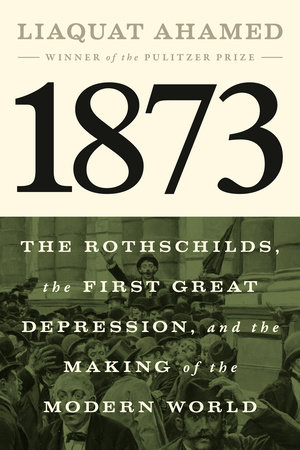
              Liaquat Ahamed – 1873

                The Rothschilds, the First Great Depression, and the Making of the Modern World

                Interview with Liaquat Ahamed about his book 1873: The Rothschilds, the First Great Depression, and the Making of the Modern World. Ahamed explores how the 1870s financial boom, fuelled by infrastructure projects like railways and the bond market’s democratisation, culminated in the Panic of 1873. He highlights the Rothschilds’ European dominance and J. Cook’s American entrepreneurialism, noting that the Franco-Prussian War’s massive indemnity and Germany’s subsequent demonetisation of silver exacerbated a profound global depression. This crisis had far-reaching consequences, including the rise of antisemitism and Jim Crow, offering crucial lessons for today’s AI-driven economy and monetary policy challenges.

                Book cover

                See also the Meb Faber episode.

                Fuchsia Dunlop – Five Tastes

                  Delicious Recipes for Chinese Flavors

                  Interview with Fuchsia Dunlop about her book Five Tastes: The Magic of Flavour in the Chinese Kitchen. Explores the philosophy of Chinese taste, where ‘way’ encompasses relational balance and transformation. Highlights the five traditional tastes (sweet, sour, salty, bitter, pungent) plus dimensions like xiangwei (fragrance/umami) and texture, which are integral to crafting harmonious meals rather than just individual dishes. Discusses balancing off-tastes, enhancing pale ingredients, and the cultural significance of ‘quiet food’ (qingdan) for palate cleansing and overall well-being, contrasting with Western culinary norms.

                  Book cover