Skip to content

Corinne Low PhD – Having It All

    What Data Tells Us About Women’s Lives and Getting the Most Out of Yours

    Interview with Corinne Low about her book Having It All: What Data Tells Us About Women’s Lives and Getting the Most Out of Yours. Discusses how individuals optimise subject to constraints, debunking the myth of ‘having it all’. Advocates for an economic lens to maximise utility in life, careers, and relationships, emphasising understanding personal preferences and societal/evolutionary constraints. Covers rethinking workplace norms, the impact of the ‘divorce revolution’ on women’s work-life balance, and strategically investing in human capital to build a fulfilling life, with implications for corporate and governmental policy.

    Book cover

    W Brian Arthur – Complexity and the Economy

      Interview with W Brian Arthur drawing from his book Complexity and the Economy. Explains how traditional economics simplifies complex systems, assuming rationality and equilibrium. Introduces the El Farol game theory problem, demonstrating how individual adaptive decisions, not deductive optimisation, create emergent, dynamic patterns – a concept physicists grasped more readily than economists. Discusses how complexity economics drops these restrictive assumptions, viewing the economy as an evolving ecology of diverse, imperfectly informed agents. This approach, mirroring shifts in other sciences, enables understanding real-world phenomena like market bubbles and crashes, moving beyond static equilibrium models towards ‘messy vitality’.

      Book cover

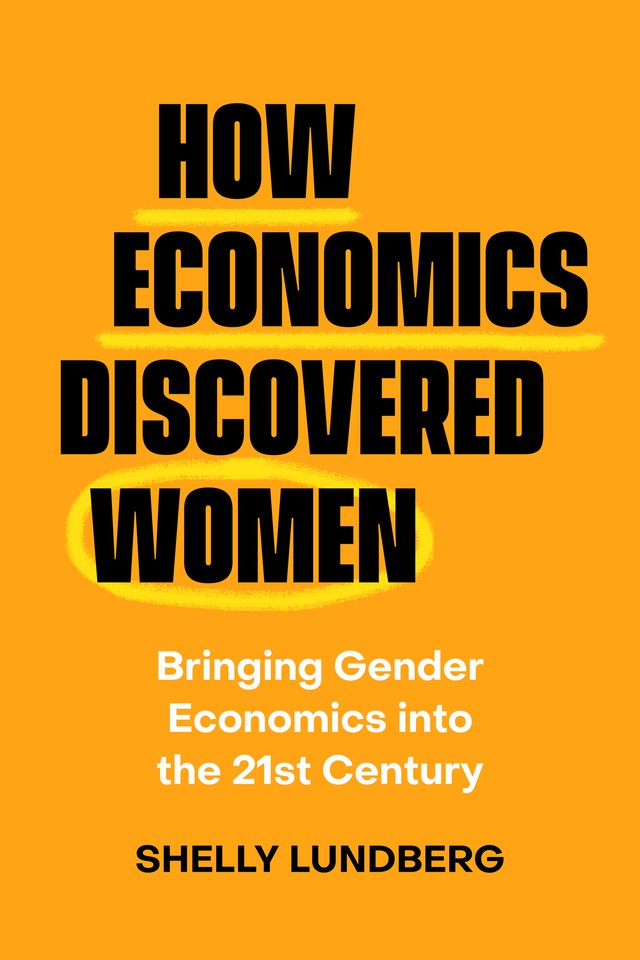
      Shelly Lundberg – How Economics Discovered Women

        Bringing Gender Economics into the Twenty-First Century

        Interview with Shelly Lundberg about her book How Economics Discovered Women: Bringing Gender Economics into the Twenty-First Century. Explains how economics, initially focused on male labour, began to include women in the 1970s due to new econometric techniques. Discusses how the ‘motherhood wage penalty’ is a key driver of gender inequality, influenced by care work assignment and social norms. Highlights that educational gaps are significantly shaped by differing socialisations for boys and girls. Advocates for rethinking persistent assumptions in economics, including discrimination, to provide a more nuanced understanding of complex societal issues.

        Book cover

        Robert Skidelsky – Keynes

          Interview with Robert Skidelsky about his three volume biography of John Maynard Keynes: Hopes Betrayed, 1883-1920 (Vol. 1), The Economist as Savior, 1920-1937 (Vol. 2), and Fighting for Freedom, 1937-1946 (Vol. 3). Details the complex Keynes-Hayek relationship and how narrow academic specialisation leads to useless economists, arguing Keynes’s broader philosophical education was crucial. Economic laws, unlike scientific ones, are context-bound, with no grand universal truths. Explains Keynes’s theory of inherent economic uncertainty, contrasting it with Hayek’s view of temporary risk. Argues that post-2008 austerity and the quantity theory of money would have drawn Keynes’s scathing criticism, who’d champion government spending to balance the economy, not just budgets. Suggests that economics, as currently practised, risks becoming an occult science or disappearing.

          AI versus the China Shock

            Podcast | 18 June 2026 | 0h 56m | Listen Later | Podcasts | Spotify
            Interview with Adam Ozimek about his analysis AI versus the China Shock, co-authored with Jason Harrison, and Nathan Goldschlag. Explores the China Shock of the 1990s and 2000s, revealing how it disproportionately affected less-educated workers in specific manufacturing hubs, highlighting the long-term struggle for adaptation in low ‘human capital’ regions. Considers the parallels to the potential AI Shock, noting that AI-exposed workers are generally highly educated and geographically dispersed, a stark contrast to past disruptions. Emphasises building economic resilience through investing in human capital and developing ‘messy jobs’ – diverse roles blending technical skills with human wisdom and social acumen – as a proactive strategy against future economic shifts.

            Trevor Jackson – The Insatiable Machine

              How Capitalism Conquered the World

              New Books in Economic and Business History | 28 April 2026 | 0h 53m | Listen Later | Podcasts | Spotify
              Interview with Trevor Jackson about his book The Insatiable Machine: How Capitalism Conquered the World. Considers how an economic system that was the result of largely uncoordinated and unplanned individual decisions came to dominate our modern world. Discusses the origins of the global monetary system in the fifteenth century and ends in the early twentieth century, when capitalism faced its most serious challenges from communism and socialism. Argues that capitalism is not natural, timeless, or inevitable.

              Dennis Rasmussen – The Infidel and the Professor

                David Hume, Adam Smith, and the Friendship That Shaped Modern Thought

                EconTalk | 6 November 2017 | 1h 11m | Listen Later | Podcasts | Spotify
                Interview with Dennis Rasmussen about his book The Infidel and the Professor: David Hume, Adam Smith, and the Friendship That Shaped Modern Thought. Discusses the friendship between David Hume and Adam Smith during the Scottish Enlightenment. Explores how Smith’s moral theory refined Hume’s concepts of sympathy, emphasising imaginative projection over mere emotional contagion. Compares their recognition of commerce as a driver of liberty, with Smith more cautiously noting its potential for moral corruption and psychological anxiety. Contrasts Hume’s overt religious scepticism with Smith’s reticent sceptical deism, examining the massive public backlash Smith faced for declaring the infidel Hume a paragon of virtue.

                Martin Parkinson – Report of the Migration System

                  The Joe Walker Podcast | 19 May 2026 | 2h 18m | Listen Later | Podcasts | Spotify
                  Interview with Martin Parkinson about his report Report of the Migration System. Examines Australia’s unintended shift into a “permanently temporary” guest-worker system involving 2.3 million people. Critiques the Soviet-style occupation lists and highlights the massive underutilisation of skilled migrants trapped by occupational licensing barriers. Details how international student fees cross-subsidise research and how migration acts as a temporary buffer against population aging. Argues that Australia’s geopolitical weight relies more on productivity, wealth, and strategic soft power – especially regarding Indonesia – than on raw population size alone.

                  This is relevant much wider than Australia.