Skip to content

Christopher Choukalas – Even the Darkest Night

    A Father’s Journey of Hope and Healing from Paternal Depression

    Interview with Christopher Choukalas about his book Even the Darkest Night: A Father’s Journey of Hope and Healing from Paternal Depression. Discusses paternal postnatal depression and the societal stigma that discourages men from openly discussing their struggles with fatherhood. Shares his personal journey through anxiety, panic attacks, and depression after childbirth, emphasising the importance of raw honesty. Underscores how a lack of peer support and the pressure to suppress emotions can exacerbate mental health challenges, affecting entire family units. Stresses the need for open dialogue and accessible mental health resources, including remote therapy, to normalise these experiences and foster healthier outcomes for fathers, partners, and children.
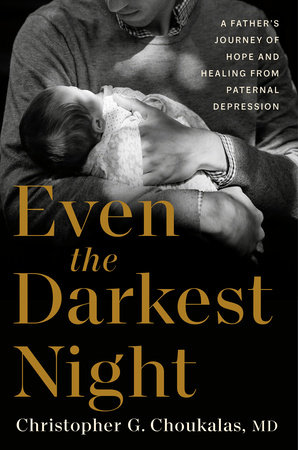
    Book cover

    John Mandrola – Bravery (and Humility) is Needed to do Proper Medical Science

      Interview with John Mandrola about his Substack essay Bravery (and Humility) is Needed to do Proper Medical Science. Discusses a clinical trial in which patients who received sham knee surgery (a real incision, but no actual repair) did as well or better than those who had the actual procedure – one performed 700,000 times annually in the U.S. Covers the power of placebo and nocebo effects (how expectation of harm can cause real suffering) to the broader philosophy of “medical conservatism” – the idea that humility, watchful waiting, and honest counsel often serve patients better than the knife. Argues that financial incentives, professional identity, and language itself (“bone-on-bone,” “the widowmaker”) conspire to push patients toward interventions that can do more harm than good.

      Rowan Jacobsen – In Defense of Sunlight

        The Surprising Science of Sun Exposure

        Econtalk | 15 June 2026 | 1h 05m | Listen Later | Podcasts | Spotify
        Interview with Rowan Jacobsen about his book In Defense of Sunlight: The Surprising Science of Sun Exposure. Backgrounds the health benefits of sunshine and makes the case for prudent sun exposure. Discusses the “heliotherapy” movement that peaked in the early 1900s in response to rickets and tuberculosis, why diagnosing skin cancer is on the rise, and why yesterday’s sunscreens may have done more harm than good.


        Book cover

        Saloni Dattani – The Hidden Bottleneck Holding Back the Future of Medicine

          Infinite Loops | 30 April 2026 | 1h 25m | Listen Later | Podcasts | Spotify
          Interview with Saloni Dattani discussing why medical innovation is often much slower than it needs to be. Explores why so much research still begins in animal models, how poor data distorts our understanding of disease, why clinical trials are one of the biggest bottlenecks in medicine, and how better systems could help promising treatments reach patients faster. Draws from her Substack Scientific Discovery, Works in Progress, and her podcast Hard Drugs.

          Saloni Dattani is one of my favourite thinkers. The Rationally Thinking episode is, I think, one of the very best on this site.

          Mark Wicclair – Conscientious Objection in Medicine

            The Dissenter | 2 January 2026 | 1h 11m | Listen Later | Podcasts | Spotify
            Interview with Mark Wicclair about his book Conscientious Objection in Medicine. Discusses what conscientious objection is, and the concepts of conscientious provision, conscience, moral complicity, and moral integrity; ethical controversies surrounding conscientious objection in medicine, with a focus on whether conscientious objection is compatible with physicians’ professional obligations, requirements to inform and refer patients, and an asymmetry between responses to conscientious objectors and conscientious providers; what happens when there is conflict between patients’ interests or wellbeing and physicians’ self-interest; and how we should evaluate ethically the beliefs and reasons of objectors, and the implications of these debates for institutions and society more widely.

            Seth Berkley – Fair Doses: An Insider’s Story of the Pandemic and the Global Fight for Vaccine Equity

              Ground Truths | 5 November 2025 | 0h 47m | Listen Later | Podcasts | Spotify
              Interview with Seth Berkley about his book Fair Doses: An Insider’s Story of the Pandemic and the Global Fight for Vaccine Equity. Recounts the creation of COVAX, which delivered 2 billion doses globally to save 2.7 million lives. Explains overcoming vaccine nationalism, funding gaps, and logistics to achieve a record 327-day rollout. Critiques the current politicisation of science and declining support for mRNA research, arguing that global health security is vital for national defense. Advocates for universal vaccines and sustained innovation to combat future epidemics.

              America in the Age of Diagnosis

                Plain English with Derek Thompson | 9 September 2025 | 0h 54m | Listen Later | Podcasts | Spotify
                Interview with Suzanne O’Sullivan about her book The Age of Diagnosis: How Our Obsession with Medical Labels Is Making Us Sicker. Argues that medicine today pathologises common symptoms in a way that’s changing the experience of the body for the worse. When doctors turn healthy people into patients, it’s not always clear if they’re reducing the risk of future disease or introducing anxiety and potentially harmful treatments to a patient who’s basically fine.

                Grace Spence Green – On Recovery, Disability, and Radical Acceptance

                  How To Academy | 1 August 2025 | 1h 01m | Listen Later | Podcasts | Spotify
                  Interview with Grace Spence Green about her book To Exist As I Am: A Doctor’s Notes on Recovery and Radical Acceptance. Backgrounds her transition from doctor supporting patients to wheelchair user fighting for her life. Discusses how people’s perception of her post-injury changed dramatically due to ableist mindsets, how her experience navigating the medical system as a patient helped her better understand her patients, how her patients have helped her, her passion for disability advocacy, and the required change in the narrative about disability and ableism.