Skip to content

Rachel Canter – Inside the Mississippi Marathon

    Interview with Rachel Canter about her Progressive Policy Institute report Inside the Mississippi Marathon. Discusses Mississippi’s dramatic academic rise, explaining that Mississippi’s transformation was not a sudden miracle, but the result of two decades of systemic reform. Key drivers included rigorous learning standards, centralized state oversight, third-grade retention policies, teacher training in the science of reading, and explicit parental notifications. Stresses that genuine progress requires long-term execution and accountability rather than chasing silver-bullet solutions.
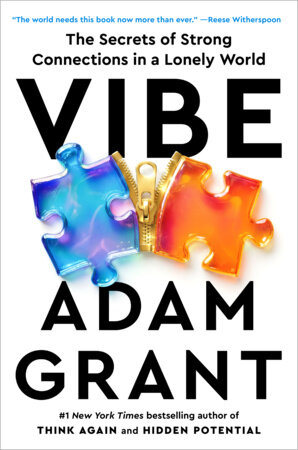
    Adam Grant – Vibe

      The Secrets of Strong Connections in a Lonely World

      Interview with Adam Grant about his book Vibe: The Secrets of Strong Connections in a Lonely World. Examines the decline of social connection, debunks myths about closeness, and emphasises that rapid bonding stems from “bounded vulnerability” rather than similarity. Categorises relationships into pals (shared interests), allies (shared goals), and companions (shared values). Discusses how modern social networks resemble fragmented bicycle wheels rather than cohesive webs, the impact of technology and perfectionism on isolation, and how intentional hosting can rebuild community.

      Book cover

      See also episodes with Adam Grant about earlier books.

      Kevin Roose – The AGI Chronicles

        The Inside Story of the Race to Create an Artificial Superintelligence

        Interview with Kevin Roose about his book The AGI Chronicles: The Inside Story of the Race to Create an Artificial Superintelligence. Explores the race for artificial superintelligence through three central leaders: Sam Altman (OpenAI), a master dealmaker driven by agency and massive scale; Dario Amodei (Anthropic), a safety-conscious scientist inspired by atomic bomb history who formulated the “scaling laws”; and Demis Hassabis (Google DeepMind), a Nobel-winning prodigy who pioneered deep reinforcement learning. Highlights how intense rivalries and commercial pressures ultimately force all three into an unrelenting acceleration race.

        Book cover

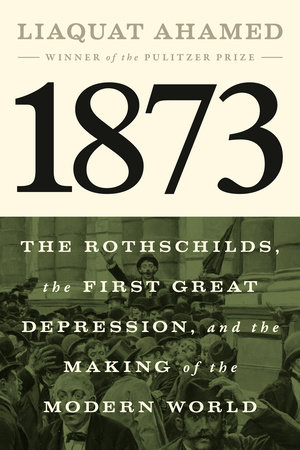
        Liaquat Ahamed – 1873

          The Rothschilds, the First Great Depression, and the Making of the Modern World

          Interview with Liaquat Ahamed about his book 1873: The Rothschilds, the First Great Depression, and the Making of the Modern World. Ahamed explores how the 1870s financial boom, fuelled by infrastructure projects like railways and the bond market’s democratisation, culminated in the Panic of 1873. He highlights the Rothschilds’ European dominance and J. Cook’s American entrepreneurialism, noting that the Franco-Prussian War’s massive indemnity and Germany’s subsequent demonetisation of silver exacerbated a profound global depression. This crisis had far-reaching consequences, including the rise of antisemitism and Jim Crow, offering crucial lessons for today’s AI-driven economy and monetary policy challenges.

          Book cover

          See also the Meb Faber episode.

          Tyler Austin Harper – Confessions of a Token Black Professor

            Interview with Tyler Austin Harper about his Atlantic essay Confessions of a Token Black Professor. Explores how ‘wokeness’ and diversity politics in higher education serve as a defence mechanism against mounting economic pressures and student debt, rather than addressing fundamental systemic issues. Recounts instances of ‘racial paranoia’ at Bates College and mandatory ‘racism self-audits’ which infringe academic freedom. Argues that this ‘elite diversification’ is a cheaper, performative response to declining public trust, driven by what he terms ‘repacious corporate capitalism’, leading to casualised faculty labour and ideological conformity. Highlights how external funding can also dictate research focus, diverting attention from deeper structural failures.

            Erik Lin-Greenberg – The Remote Revolution

              Drones and Modern Statecraft

              Interview with Erik Lin-Greenberg about his book The Remote Revolution: Drones and Modern Statecraft. Posits that drone technology, by dramatically reducing the cost of attack and removing human risk, is fundamentally reshaping warfare, leading to more frequent but less escalatory military confrontations, creating “new rungs on the escalation ladder”. The cost exchange ratio now favours the attacker, empowering weaker actors to launch precision strikes and compelling major powers to adapt, as seen in the US reverse-engineering Iranian drones. This dynamic permits greater flexibility in crisis management, fostering more military interactions below the threshold of traditional conflict.

              Book cover

              Samuel Moyn – Gerontocracy in America

                How the Old Are Hoarding Power and Wealth―and What to Do About It

                Plain English with Derek Thompson | 12 June 2026 | 1h 01m | Listen Later | Podcasts | Spotify
                Interview with Samuel Moyn about his book Gerontocracy in America: How the Old Are Hoarding Power and Wealth—and What to Do About It. Discusses the rise of gerontocracy in America, whether elderly power has become a problem, what reforms could rebalance the scales between generations, and whether this argument is a serious critique of American politics or simply ageist nonsense.


                Book cover

                See also the Think with KERA episode.

                Alex Imas – The Case Against the AI Job Apocalypse

                  Plain English with Derek Thompson | 12 May 2026 | 0h 53m | Listen Later | Podcasts | Spotify
                  Interview with Alex Imas discussing why automation fears persist despite contradictory evidence, the history of technological disruption, and why AI may not be destroying work as much as it is simply redirecting us toward entirely new industries and opportunities. Draws from his Substack Ghosts of Electricity.